Skip to content

Products · Pabean Software

KITE Inventory - IT Inventory Application for KITE Companies

Kite Inventory is a web-based IT Inventory application for companies that hold the KITE (Import Facility for Export Purposes) facility. It records the full journey of goods, from import documents, receiving, production, and export shipments, to facility accountability, in one system that is tidy, tamper-proof and audit-ready.

Ready-to-Use Customizable
Product screens
Select an image for a closer look.

Meet the product

Product overview

One system for the entire KITE goods flow

KITE companies must prove that raw materials imported under the facility are actually processed and exported. The problem is that data is often scattered across Excel sheets, warehouse notes, and separate customs documents. When Customs asks for a report, the team has to rebuild everything from scratch.

Kite Inventory brings all of that together in one easy-to-use web application.

Start from customs documents

Upload the original PIB or PEB PDF from CEISA. The application automatically reads the header, item lines, supporting documents, packages, and containers, then shows them for review before saving. Everything runs on your own server, with no data sent to third parties.

Clean, traceable receiving

Every receipt is linked to its source document. Quantity differences, damaged goods, and QC quarantine are clearly recorded. Stock is stored per lot, per warehouse, and per quality grade, so you always know which goods came from which document.

Controlled production with BOM

Create a Bill of Materials (BOM) with versions and effective dates, then request approval from another user. Production orders keep a BOM snapshot, record material consumption from multiple lots, good and defective output, and scrap and loss. Standard vs actual reports are available instantly.

Export shipments through to realization

A shipment draft automatically reserves stock. Continue to picking list, packing, delivery note, and packing list, then post the issue. Record the PEB number, NPE, and export realization in the same place. Buyer returns go into quarantine and their effect on accountability is visible right away.

Accountability you can prove

Allocate raw materials to exported output, then request a review from another user. Every decision is recorded with who, when, and why.

Two immutable ledgers

Kite Inventory separates the physical stock ledger from the facility obligation ledger. Both are append-only and protected at the database level, so historical data can never be edited or deleted silently. Every important action is written to the audit trail.

Complete warehouse control

Inter-warehouse transfers with transit locations, partial receipts, stock

opname with freeze and separate approval, minimum stock, stock cards with opening, running, and closing balances, and stock period closing. Backdated postings are restricted and checked so historical balances are never negative.

Reports and traceability

Material requirement reports, standard vs actual production, stock cards, guarantee register, and CSV export. The traceability feature shows the trail of a single lot from import document to export.

Role-based access

Administrator, supervisor, warehouse, exim, and auditor each have their own access. Auditors can inspect and export data without changing anything.

Customizable appearance

Company logo, primary color, and light or dark mode can be set by the administrator, including on the login page.

Needs addressed

Problems it solves

1. Scattered data

Stock lives in Excel, customs documents in folders, production notes in books. There is no single source of truth.

2. Hard to prove accountability

During a Customs audit, the company struggles to show which imported material was used for which export.

3. Manual entry from PIB/PEB

Retyping hundreds of item lines from PDFs takes time and causes errors.

4. Stock can be changed without a trace

Balances are easy to edit, delete, or backdate without anyone noticing.

5. No approval control

BOMs, stock counts, and material allocations are created and approved by the same person.

6. Differences and damaged goods go unrecorded

Short, damaged, or returned goods often disappear from reports.

7. Unclear access rights

Everyone can see and change everything.

8. Reports eat up time

Stock cards, material requirements, and production reports are compiled by hand every month.

Features & strengths

What you can do

Features that support your daily workflows.

1. One system, one source of data

Item master, customs documents, stock, production, shipments, and accountability live in one application.

2. Two separate, immutable ledgers

The physical stock ledger and the facility obligation ledger are append-only and protected by database triggers. Historical numbers never change.

3. Automatic PIB/PEB reading from PDF

Header, item lines, supporting documents, packages, and containers are extracted automatically, reviewed, then saved. No data leaves your server.

4. Traceability from import to export

Every lot can be traced to its source document, the production order that consumed it, and the export shipment that carried it.

5. Approval by a different person

BOMs, stock counts, and accountability allocations must be reviewed by another user before taking effect.

6. Complete audit trail

Who, when, what, and why are recorded for every important action.

7. Strict stock control

Automatic stock reservation, backdate limits, period closing, minimum stock, and historical balance checks so balances are never negative.

8. Role-based access

Administrator, supervisor, warehouse, exim, and auditor with clear access. Auditors can only view and export.

9. Ready-made reports

Stock cards, material requirements, standard vs actual, guarantee register, and CSV exports whose figures are locked at the time the report is generated.

10. Flexible deployment

Single company or multi-company, on-premise or cloud. Appearance can be customized with your company logo and colors.

Implementation & integration

Discuss implementation scope for your workflows and existing systems.

Ready-to-Use

Can be used with a standard configuration.

Customizable

Core modules are ready; workflows and reports can be adjusted.

Want to see this product in action?

Schedule a demo or request an implementation quotation for your requirements.

Other products

All products
Ready-to-Use Customizable Enterprise Deployment

FMCG ERP - All-in-One FMCG Distribution System

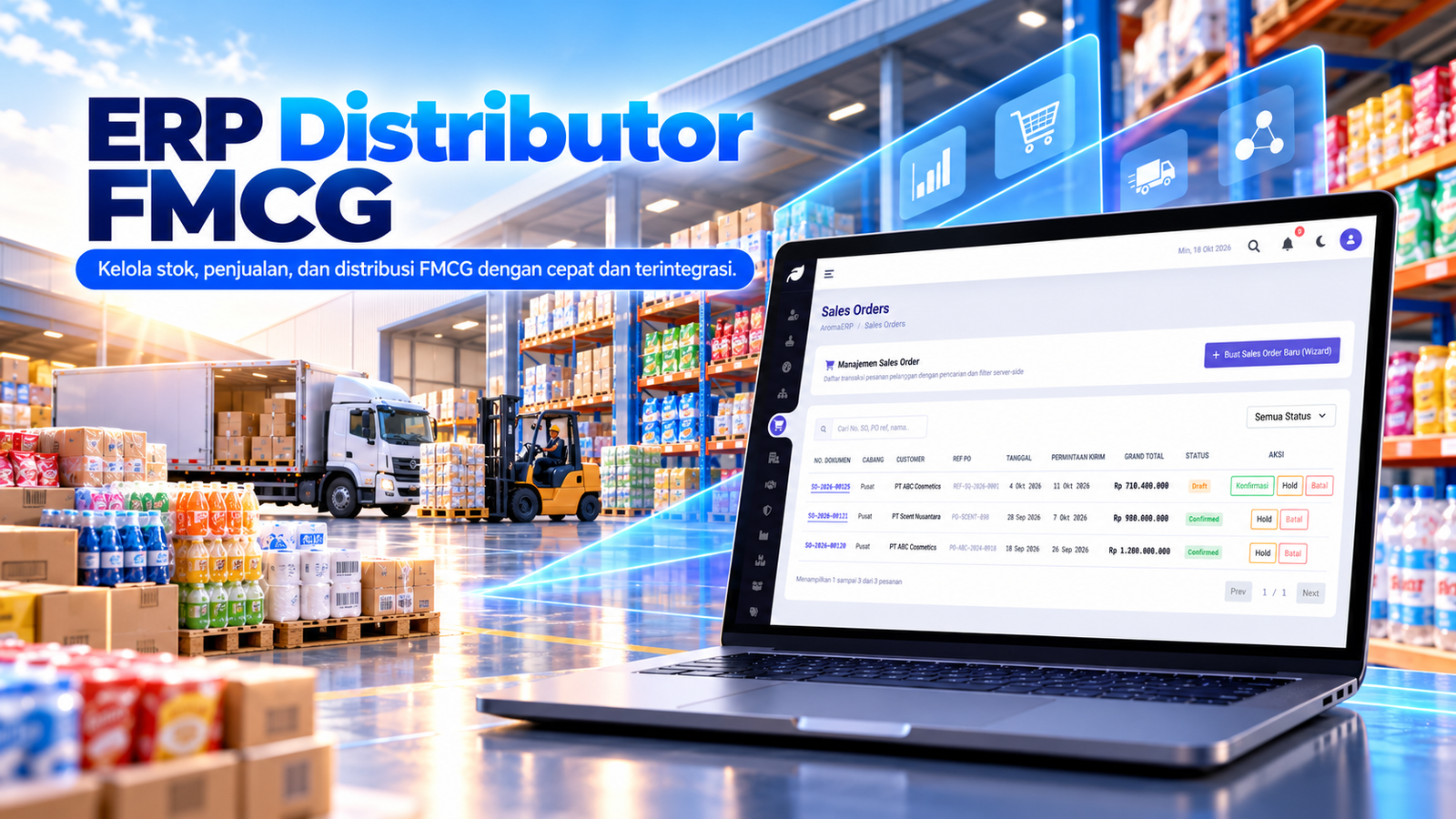
FMCG ERP is a web application for consumer goods distributors. One system for warehouse stock, outlet sales, van sales with stock on the truck, promotions, returns, receivables, and bookkeeping. Stock is issued automatically by the nearest expiry date (FEFO). Every transaction posts straight to the general ledger, so stock, receivables, and financial reports always match.

View details
Ready-to-Use Customizable Enterprise Deployment

ERP Checmical Distributor

ERP Distributor is a web-based application that runs the entire operation of a distribution company in one system: CRM, sales, procurement, import, warehouse, quality control, receivables, payables, cash & bank, and accounting. All data is connected automatically, with multi-branch and multi-warehouse support, multi-level approvals, role-based access, and ready-to-use reports.

View details
Ready-to-Use Customizable Enterprise Deployment

EPROC — Digital Procurement System

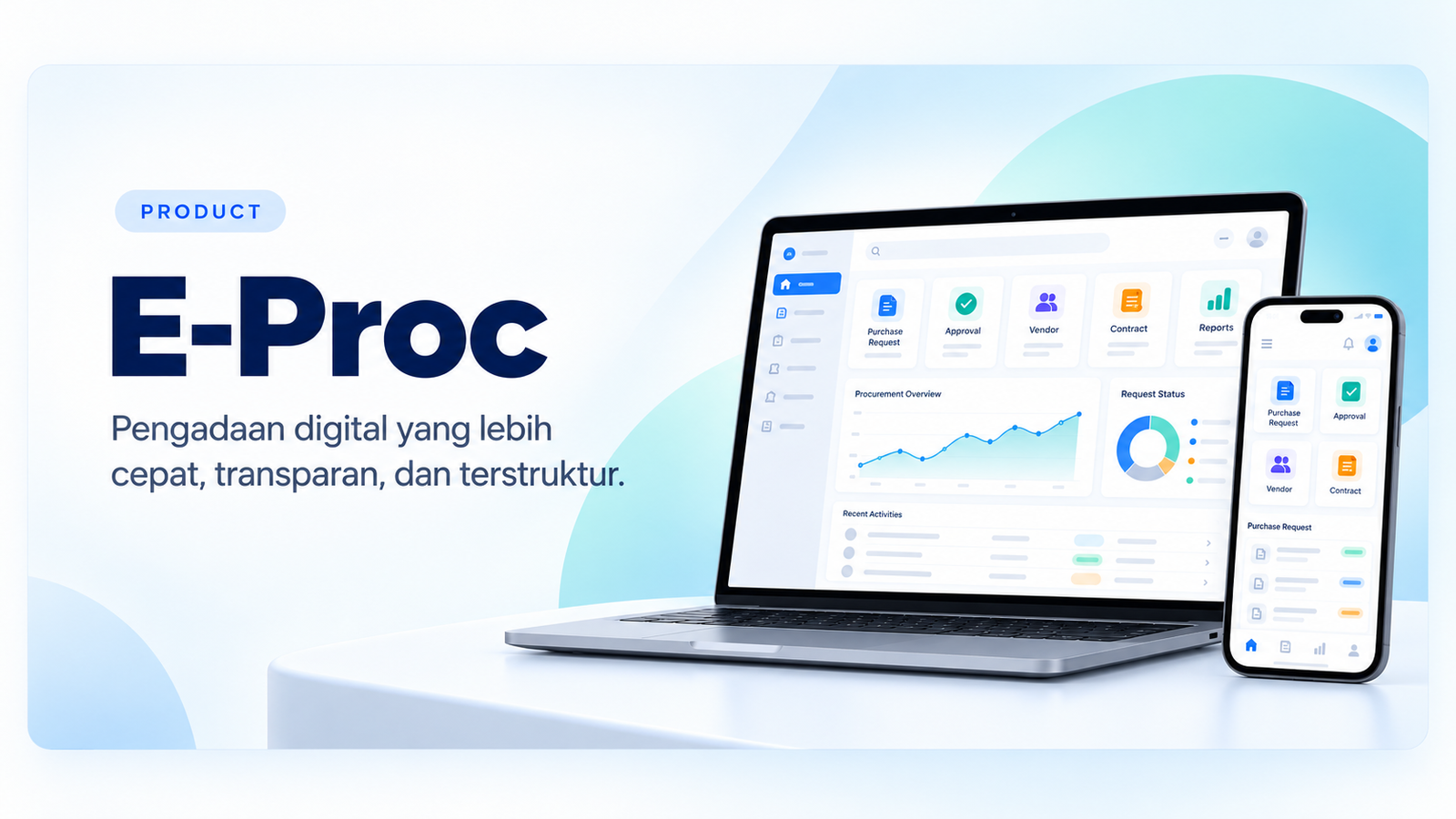
EPROC helps companies manage purchase requests, vendors, bids, contracts, and invoices in one web application. Multi-step approvals, budget monitoring, and AI-assisted bid summaries help teams organize their work and make decisions with clearer information.

View details