
Skip to content

System Integration

System integration connecting ERP, regulation and devices

System integration is the work of connecting applications, databases, devices and third-party systems so data flows automatically without double entry. MBT designs enterprise integrations that are reliable, observable and keep running when one of the systems has a problem.

Enterprise Integration

  • CEISA 4.0 Host-to-Host & INSW
  • ERP, payment and third-party APIs
  • Attendance machines, IoT and legacy systems
  1. 01Company ERP
  2. 02CEISA / INSW
  3. 03Integration layer
  4. 04Payments & third parties
  5. 05Devices & IoT

Business problems

Business problems we solve

Double entry across systems

The same data is retyped into the ERP, government portals and internal applications.

Data out of sync

Stock, status and transactions differ between systems, so reports cannot be trusted.

Fragile, unmonitored integrations

Failed data transfers are only noticed after someone complains.

What we build

Integrations we handle

  • 01

    REST API Integration

    Design and build secure, documented and versioned APIs.

  • 02

    ERP Integration

    Synchronize master data, transactions and status between the ERP and other applications.

  • 03

    Government Integration

    Data exchange with government agency systems following official specifications.

  • 04

    CEISA / Customs Integration

    CEISA 4.0 Host-to-Host and INSW for import and export documents.

  • 05

    Payment Integration

    Payment gateways, virtual accounts and payment reconciliation.

  • 06

    Attendance Machine Integration

    Pull data from attendance and fingerprint machines into HRIS and payroll.

  • 07

    IoT / Device Integration

    Connect sensors, cameras and field devices to business systems.

  • 08

    Legacy System Integration

    Connect legacy applications through APIs, databases or file exchange.

  • 09

    Third-Party API Integration

    Integration with third-party services such as marketplaces, logistics and messaging.

Example applications

Our integration principles

  • Observability

    Every data exchange is recorded with API logs, error logs and traceable status.

  • Resilience

    Queues and retry mechanisms so a failure in one system does not stop the others.

  • Security

    Token authentication, encryption and restricted access for every connection.

Architecture & approach

Architecture & approach

Integration is built as its own layer, so a change in one system does not force changes in others.

  1. 01

    System audit

    Map the systems, data, API access and data quality to be connected.

  2. 02

    Data contract

    Agree on format, frequency and validation rules for every data exchange.

  3. 03

    Integration layer

    Build APIs, queues and data transformations with logging and retries.

  4. 04

    End-to-end testing

    Test normal flows, invalid data and unavailable target systems.

  5. 05

    Monitoring

    Status dashboards and failure alerts after go-live.

Technology & integration

Technology & integration

  • REST API
  • Host-to-Host (H2H)
  • Queues & background jobs
  • Laravel (PHP)
  • .NET (C#)
  • Java
  • MySQL
  • Docker

Deployment

Deployment models

Option Description Best for
On-premise integration layer Middleware runs on the company network close to the ERP and devices.
  • ERP and devices on the internal network
Cloud integration Middleware in the cloud connects third-party services and many locations.
  • SaaS & marketplace integration
  • Many branches
Hybrid On-site agents send data to a cloud integration service.
  • Legacy systems without direct internet access

Proof of work

Case study: CEISA 4.0 Host-to-Host

We implemented CEISA 4.0 Host-to-Host at PT Otics Indonesia, PT Mesin Isuzu Indonesia and PT SGMW Motor Indonesia. BC 2.0/BC 3.0 documents are created or imported from Excel, submitted to Indonesian Customs CEISA and INSW, and their status and responses are monitored from one dashboard, with API logs, error logs and an option to integrate with the ERP.

Document submission to CEISA & INSW PIB, billing and SPPB printing SPI quota control API and activity logs
View case study: CEISA 4.0 Host-to-Host Integration

Proof of work

Related case studies

View all Case Studies System Integration

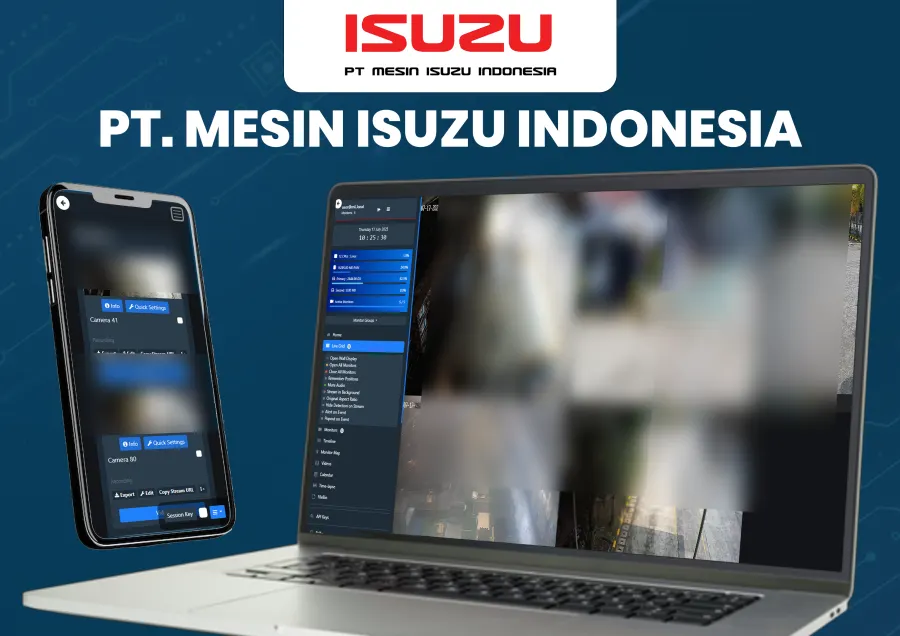
PT. MESIN ISUZU INDONESIA

Smart Online CCTV

A web-based Smart CCTV platform supporting KITE facility supervision obligations, with real-time access, multiple cameras and motion detection.

Manufacturing Customs & Trade Enterprise Software Engineering System Integration
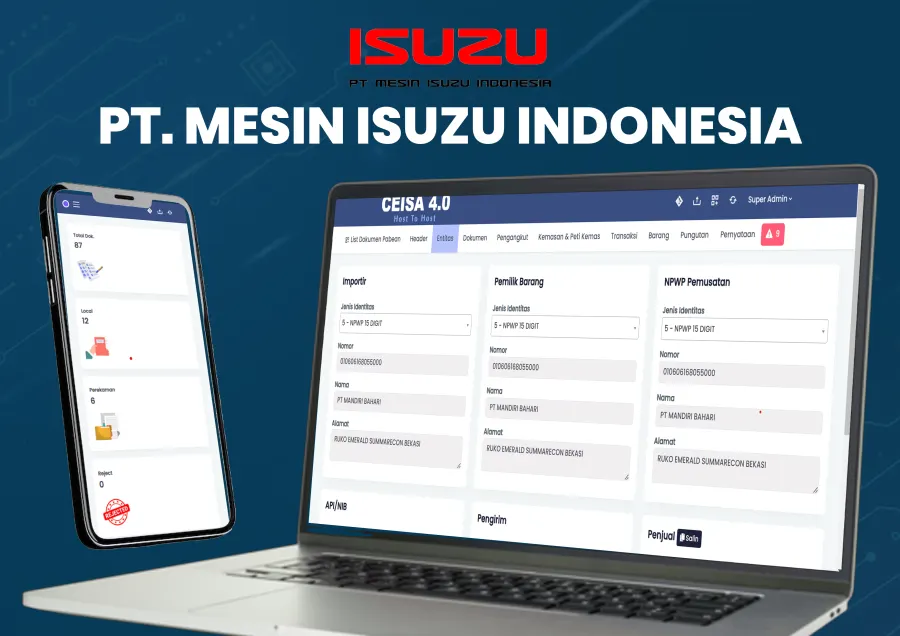
PT. MESIN ISUZU INDONESIA

CEISA 4.0 Host-to-Host Integration

CEISA 4.0 Host-to-Host integration for BC 2.0 and BC 3.0 documents: creation, Excel import, submission to CEISA and INSW, and SPI quota control.

Manufacturing Customs & Trade Enterprise Software Engineering System Integration
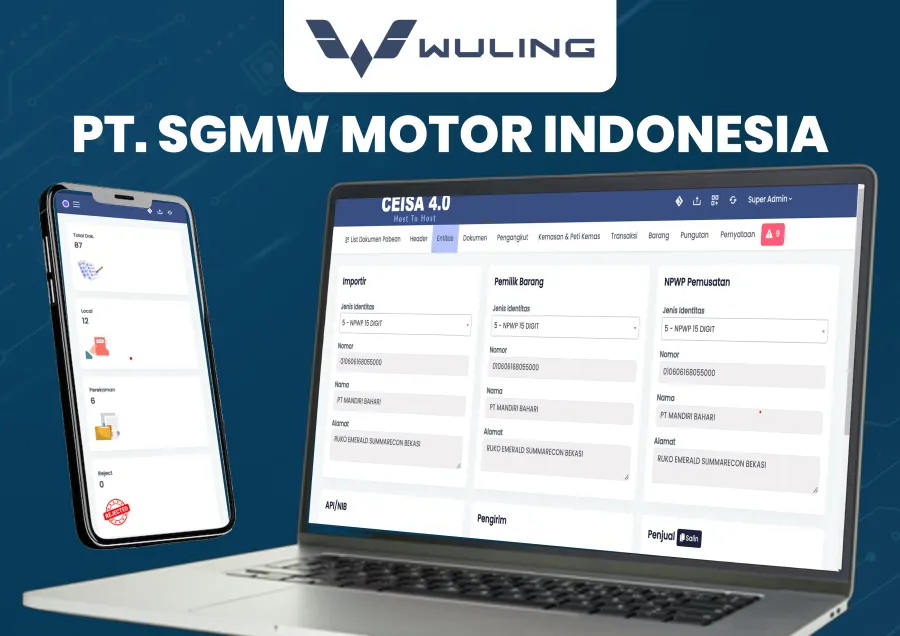
PT. SGMW MOTOR INDONESIA

CEISA 4.0 Host-to-Host Integration

CEISA 4.0 Host-to-Host integration for BC 2.0 and BC 3.0 documents: creation, Excel import, submission to CEISA and INSW, and SPI quota control.

Manufacturing Customs & Trade Enterprise Software Engineering System Integration

FAQ

Frequently asked questions

What if our system has no API?
We can build an API layer on top of the database, use scheduled file exchange, or add middleware depending on your system.
Can MBT integrate fingerprint devices?
Yes. Attendance data from attendance and fingerprint machines can be pulled through the device SDK, API or database, then sent to HRIS and payroll.
Can the CEISA integration connect to our ERP?
Yes. Our CEISA Host-to-Host solution can be integrated with the company ERP to reduce re-entry of document data.
How are integrations monitored after go-live?
Through a status dashboard, API logs and error logs, so failures can be identified and reprocessed.

Ready to discuss your requirements?

Tell us about your context and goals. We will help map the solution, priorities and an initial estimate.