

Skip to content

ERP Integration

ERP integration so transaction data is never entered twice

ERP integration connects the company ERP with other applications, such as customs systems, HRIS, e-procurement, warehouse or mobile apps, so master data and transactions stay synchronized automatically. The ERP remains the primary source of data while other applications read and send data through an integration layer.

ERP System Integration

  • Master data & transaction sync
  • The ERP stays the primary source
  • Data logs and reconciliation
  1. 01ERP
  2. 02Connector / API
  3. 03Integration layer
  4. 04Validation & mapping
  5. 05Connected applications

Business problems

Business problems we solve

ERP data is exported by hand

Data is exported to Excel, then imported or retyped into other systems.

Item and vendor codes differ

Master data is inconsistent, so transactions are hard to match.

Reports do not match

Figures in the ERP and supporting applications differ at period end.

What we build

What we build

  • 01

    Master data sync

    Items, vendors, customers, employees and organization structure.

  • 02

    Transaction integration

    Purchase orders, invoices, goods receipts and other documents.

  • 03

    ERP to government systems

    ERP data as the source for customs documents such as CEISA.

  • 04

    ERP to mobile apps

    ERP approvals and information accessible from phones.

  • 05

    Reconciliation

    Reports of data differences between systems for follow-up.

Example applications

Example applications

  • ERP to CEISA

    Import document data is taken from the ERP so it is not retyped in the customs application.

  • e-Procurement to ERP

    POs approved in e-procurement are recorded in the ERP automatically.

  • HRIS to ERP

    Payroll results are sent to the ERP as journals.

Architecture & approach

Architecture & approach

  1. 01

    Review ERP access

    APIs, database views or export mechanisms available in your ERP.

  2. 02

    Data mapping

    Field, code and transformation rules between systems.

  3. 03

    Build connectors

    Connectors with validation, queues and logs.

  4. 04

    Test & reconcile

    Compare integrated data with the source data.

Technology & integration

Technology & integration

  • REST API
  • Database integration
  • Scheduled file exchange
  • Queues & background jobs
  • Laravel (PHP)
  • .NET (C#)
  • MySQL

Deployment

Deployment models

Option Description Best for
On-premise Connectors run on the same network as the ERP.
  • On-premise ERP
  • Direct database access
Cloud Connectors use the cloud ERP's API.
  • Cloud / SaaS ERP

Proof of work

Related case studies

View all Case Studies System Integration

PT. MESIN ISUZU INDONESIA

Smart Online CCTV

A web-based Smart CCTV platform supporting KITE facility supervision obligations, with real-time access, multiple cameras and motion detection.

Manufacturing Customs & Trade Enterprise Software Engineering System Integration
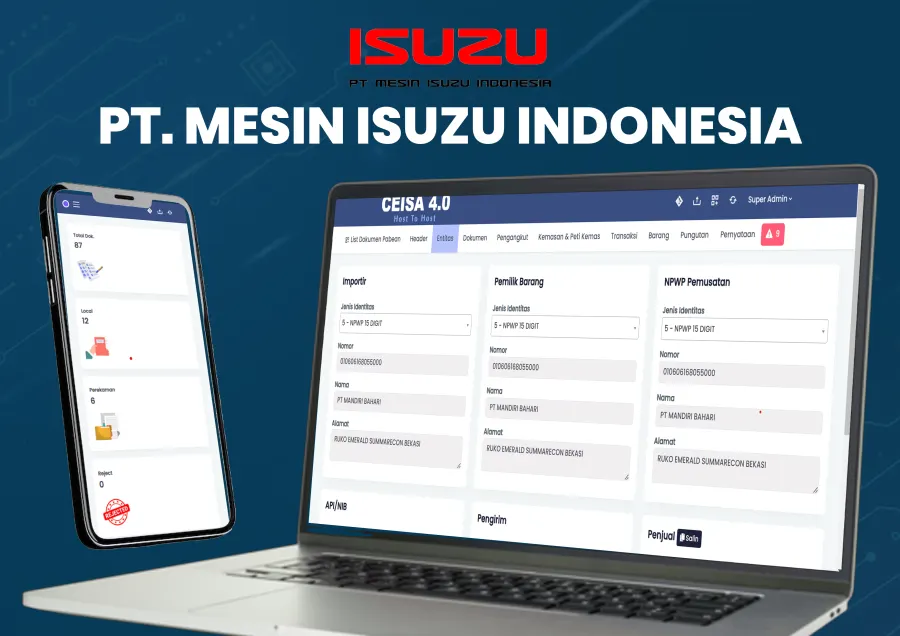
PT. MESIN ISUZU INDONESIA

CEISA 4.0 Host-to-Host Integration

CEISA 4.0 Host-to-Host integration for BC 2.0 and BC 3.0 documents: creation, Excel import, submission to CEISA and INSW, and SPI quota control.

Manufacturing Customs & Trade Enterprise Software Engineering System Integration
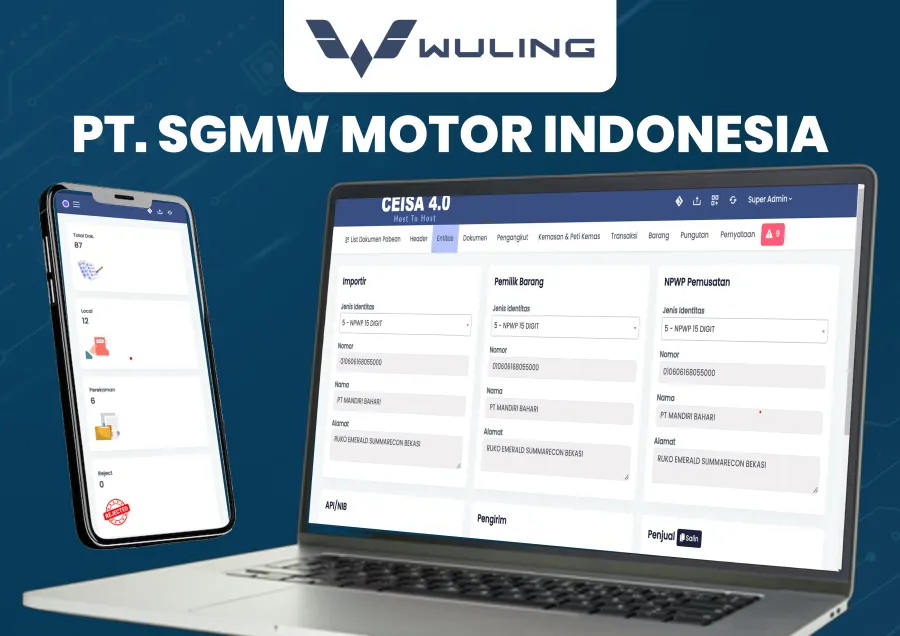
PT. SGMW MOTOR INDONESIA

CEISA 4.0 Host-to-Host Integration

CEISA 4.0 Host-to-Host integration for BC 2.0 and BC 3.0 documents: creation, Excel import, submission to CEISA and INSW, and SPI quota control.

Manufacturing Customs & Trade Enterprise Software Engineering System Integration

FAQ

Frequently asked questions

Which ERPs can be integrated?
Integration depends on the access mechanisms the ERP provides, such as APIs, databases or file exports. We assess that access before choosing the approach.
Does integration change our ERP?
As little as possible. Integration is built as a separate layer that reads and sends data through the ERP's official mechanisms.

Ready to discuss your requirements?

Tell us about your context and goals. We will help map the solution, priorities and an initial estimate.